Contents
You’ve created great content. Now what?
The quality of your content is, of course, very important.
It’s not about creating content, it’s about distributing it the right way that makes a difference.
That’s why content distribution is an essential component of content marketing.
It’s not just about publishing, it’s about reaching the right person, in the right place, at the right time.
In this article, I will explain the basic distribution channels you can use to spread your content and how you can strategically integrate these channels.
1. Channels Where You Can Distribute Content (Digital Marketing Trinity)
1.1. Owned Media: Channels That Belong to You
Owned media are platforms that are completely under your control and allow you to connect directly with your target audience.

Examples include:
- Your website
- Your blog page
- Your email newsletter list
- Your mobile app or customer portal.
Advantages:
- Cost-effective
- Builds trust over the long term
- Contributes to SEO
How to use it effectively?
- Publish blog content on your website in an SEO-friendly manner
- Segment your email lists and send content tailored to each group
- Create content addressing frequently asked questions to keep users on your site longer
1.2. Earned Media: Earned Visibility
Earned media is visibility you gain through organic means. In other words, people share your content of their own accord, refer to you, and even write about you.
Examples:
- Content shares on social media
- Your name being mentioned on blogs or news sites
- Backlinks (other sites linking to your content)
- User reviews and comments
Why is it valuable?
- It includes third-party approval (social proof)
- It increases trust
- It greatly contributes to SEO
Strategic tip: Produce content that is worth sharing. For example, statistical research, original analyses, infographics, or content that solves a common problem experienced by many people has the potential to go viral.
1.3. Paid Media: Paid Distribution Channels
If you want your content to reach a wider audience in a short time, paid channels come into play. Targeted advertising campaigns can be particularly effective for new brands.
Channels you can use:
- Facebook/Instagram Ads
- Google Ads (Display or Search network)
- LinkedIn sponsored content
Where does it work?
- Announcing new content
- Attracting targeted traffic
- Remarketing campaigns
- Achieving short-term impact while growing your target audience
Important note: Paid media is the “supporting player” of content marketing, but it should not be the main player. A strategy based solely on advertising will not build a loyal readership.
| Type | Control | Cost | Reliability | Impact Duration |
| Owned | High | Low | Medium | Long-term |
| Earned | Low | None | High | Medium-long |
| Paid | High | High | Low-medium | Short-term |
2. Types of Content Distribution
2.1. Influencer Collaborations
Influencers are content creators who have an impact on a specific audience. Collaborating with micro and niche influencers in particular increases the credibility of your content while also ensuring that you reach the right target audience.
Ways you can use this:
- Form content partnerships with micro-influencers in your field.
- Let influencers try out your product and create content.
- Encourage influencers to share content about your brand on their accounts.
- Create content-focused sponsored posts on YouTube, Instagram Reels, or TikTok.
Why does it work?
- Content reaches a wider and more targeted audience through influencers
- It facilitates trust transfer (followers transfer the trust they have in the influencer to you)
- It provides an opportunity to present your content in a different voice
- It is an effective promotional channel, especially for new or unknown brands
2.2. Community-Based Distribution
Communities are active user groups that gather around a specific topic, industry, or area of interest. Content shared within these groups attracts attention due to its high level of engagement and loyalty.

Ways you can use it:
- Share content on LinkedIn groups or Slack communities
- Offer content in industry-specific channels on platforms such as Discord or Telegram
- Organize live streams and Q&A events in communities
- Increase interest by offering e-books, mini-guides, or educational series as exclusive content
Why does it work?
- It provides visibility in “organic” channels where real interaction takes place
- It not only shares your content but also encourages conversation around it
- It offers the opportunity to build deeper connections with loyal and engaged audiences
- It builds brand awareness slowly but steadily
2.3. Alternative Distribution Platforms: Reaching Niche Audiences
Not everyone is on LinkedIn or Instagram. Some of your audience is on Reddit in a subreddit, while others are on Quora looking for questions and answers.
These types of alternative platforms offer powerful opportunities to reach niche audiences.
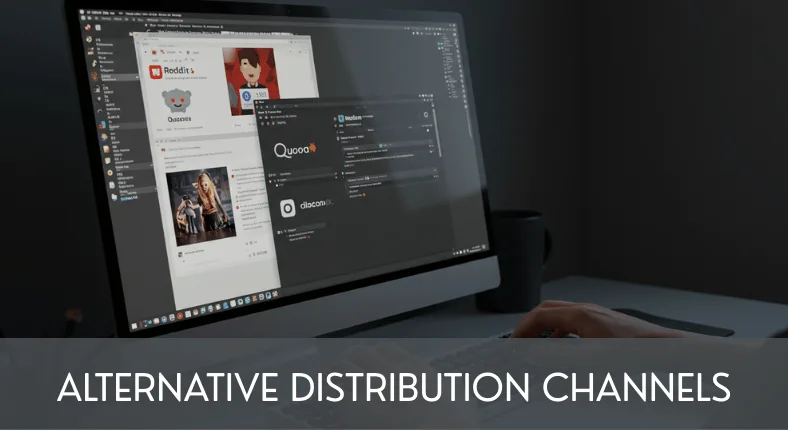
Example platforms:
Reddit → Communities specific to certain industries
Quora → Reach knowledge seekers with expert answers
Discord → Niche communities with active participants
Medium → Republish thoughtful and in-depth content
YouTube Shorts, TikTok → Micro-content distribution, especially for B2C brands
How to use them?
- On Quora, answer questions related to your industry by linking to your blog posts
- On Reddit, share genuinely useful content without spamming
- In Discord communities, organize Q&A events or share e-books
2.4. Strategic Integration: Cross-Channel Approach
Remember, distribution channels should not work alone, but together as an ecosystem.
Cross-channel integration means that all your channels deliver the same message in different formats but in a consistent manner.
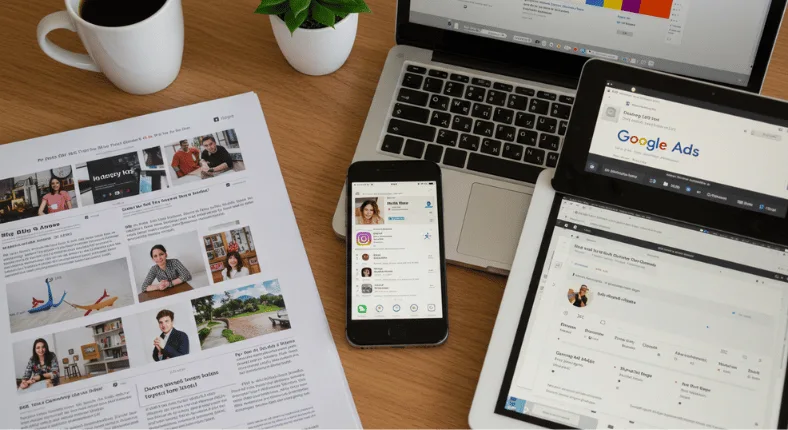
Example scenario:
- You publish your blog post on your website (owned)
- You summarize the same post and share it on LinkedIn (earned)
- You share a mini post on Instagram with a key visual
- You run a campaign with a small advertising budget to promote the content (paid)
- You have an influencer comment on the article
In this way, each channel supports the other, and your message reaches a wider audience with a ripple effect.
3. Real Case Study
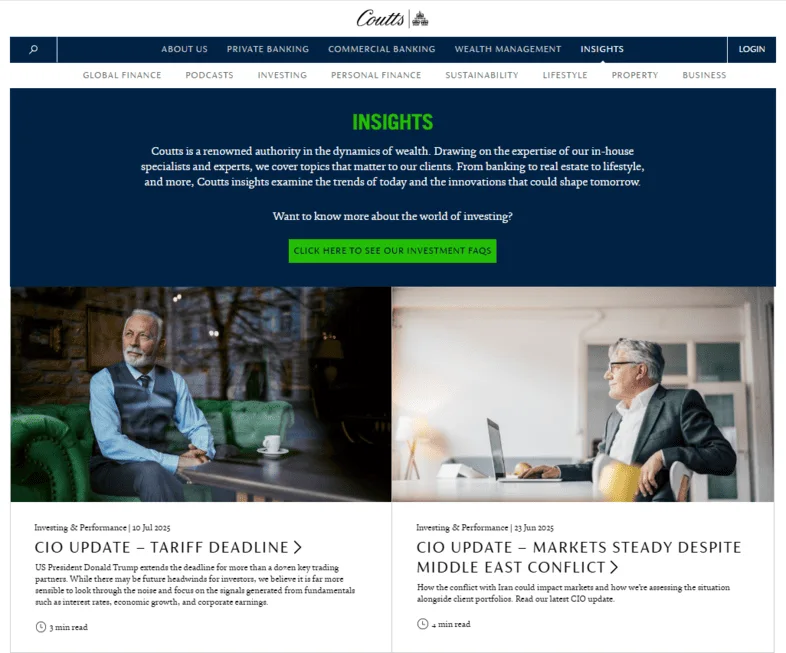
3.1. Coutts – Content + SEO Strategy
Case Summary:
- Brand: Coutts (UK-based private bank)
- Duration: First half of 2024
- Channels:
- Owned: The bank’s website
- Earned: Unpaid visibility (especially backlinks in the finance and investment sector, citations in industry publications)
- Paid: Context-specific digital ads
Source: Content Marketing Strategy Case Studies
How Did the Strategy Work?
- SEO & Content Analytics: SEO and traffic performance were measured using tools such as SEMrush.
- Valuable content was produced:
Research reports
Industry infographics
Webinars - Syndication (content distribution): References and backlinks were provided on other finance websites.
Results & Impact
- Monthly organic visitors: Approximately 142,000
- SEO value: DA (Domain Authority) score of 46 → indicating strong performance.
Comment
This case study demonstrates the effectiveness of text-based distribution through a long-term content + SEO-focused strategy.
Especially in the finance sector, content such as blogs, seminars, and reports directly reach the target audience, effectively feeding both direct traffic and earned media channels.
Final Thoughts
Redesign your distribution plan for your next piece of content.
Determine in advance who you will reach, where, and how.
Discover the striking difference between unplanned sharing and strategic distribution.

 Share
Share X
X ChatGPT
 Perplexity